True Outdoors Blog
Recent Posts
We invite you to monitor our News Blog for informative articles.
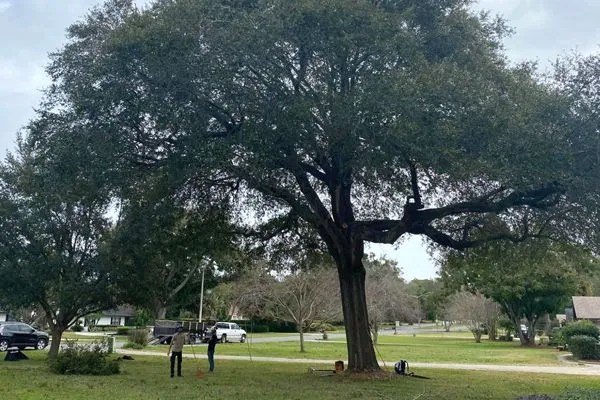
Proper tree pruning is essential for maintaining the health and appearance of your landscape. While it may be tempting to handle pruning on your own, improper techniques can cause long-term damage to your trees and even create safety hazards. An ISA-certified arborist has the knowledge and experience to care for trees correctly. By trusting a qualified professional, you can help ensure your trees thrive while minimizing risk. At True Outdoors, our local ISA-certified arborist service provides expert tree pruning in Volusia County. Here are four important reasons to have an ISA-certified arborist handle your tree pruning needs. Promotes Tree Health and Longevity An ISA-certified arborist understands how trees grow and how different species respond to pruning. They know which branches to remove and which to preserve in order to promote healthy growth. Proper pruning helps eliminate dead, diseased, and damaged limbs that could otherwise spread decay. By improving airflow and sunlight penetration, professional pruning supports stronger, healthier trees that can live longer. Enhances Safety on Your Property Overgrown or weakened branches can pose serious risks, especially during storms. Dead limbs may fall suddenly, potentially causing injury or property damage. An arborist can identify hazardous branches and remove them safely. Regular pruning also helps maintain proper clearance from structures, walkways, and power lines. Improves Tree Structure and Appearance Pruning is not just about removing branches—it’s also about shaping the tree for better structure and aesthetics. An ISA-certified arborist can guide the growth of young trees and correct structural issues in mature ones. This results in a more balanced and visually appealing canopy. Well-maintained trees can significantly enhance the overall look of your property. Prevents Costly Mistakes Improper pruning techniques, such as overcutting or making incorrect cuts, can weaken a tree and make it more susceptible to disease and pests. In some cases, poor pruning can even lead to permanent damage or the need for removal. Hiring a certified arborist helps you avoid these costly mistakes. Their expertise ensures that pruning is done correctly, preserving the health and stability of your trees. Professional Tree Pruning in Volusia County, FL At True Outdoors , we provide expert tree pruning in Volusia County and the surrounding area. Give us a call at 386-242-9035 to arrange a local tree services estimate !
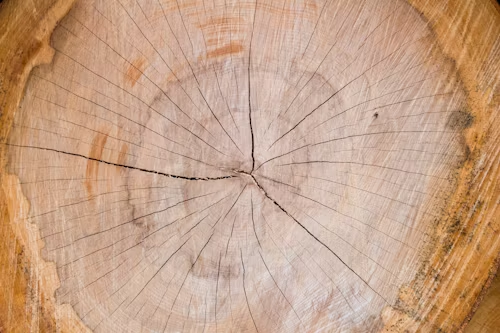
After a tree is removed, the remaining stump can be more than just an eyesore. It can interfere with landscaping, create safety hazards, and even attract unwanted pests. Many homeowners are unsure whether they should leave the stump in place, grind it down, or remove it entirely. Understanding the differences between stump grinding and stump removal can help you choose the best option for your yard. At True Outdoors, our local ISA-certified arborists are happy to answer your questions about stump grinding and removal in Orange County, FL. What Is the Difference Between Stump Grinding and Stump Removal? Stump grinding involves using specialized machinery to grind the stump down below ground level. The remaining roots are left in the soil to naturally decompose over time. This method is less invasive and typically faster than full removal. Stump removal, however, extracts the entire stump along with roots from the ground. Why Should I Remove a Tree Stump? Leaving a stump in your yard can lead to several problems. Over time, it may become a breeding ground for insects such as termites or ants. Decaying wood can also attract fungi and diseases that may spread to other healthy plants nearby. Stumps can create tripping hazards and make mowing or landscaping more difficult. Removing the stump improves both the safety and appearance of your property. What Happens to the Debris? Stump grinding produces wood chips that resemble mulch. Many homeowners choose to keep the mulch for use in garden beds or around trees. If you prefer, the debris can be hauled away. After grinding or removal, the area can be filled with soil and reseeded to restore a smooth lawn surface. Is Professional Service Necessary? While some homeowners might consider attempting to remove stumps themselves, professional service is highly recommended. Stump grinding equipment is powerful and can be dangerous without proper training. Professionals have the experience and tools needed to complete the job safely and efficiently. They also ensure that nearby structures are protected during the process. Where Can I Find Stump Grinding & Removal in Orange County, FL? At True Outdoors, we provide expert stump grinding and removal in Orange County, FL and the surrounding area. Give us a call at 386-242-9035 to ask for a tree services estimate in greater Orange County, FL !
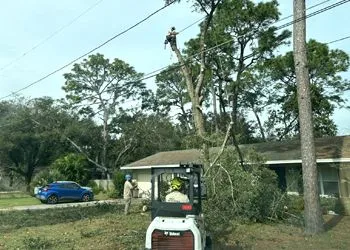
Hazardous trees can pose serious risks to people, homes, vehicles, and nearby structures if they are not addressed promptly. Storm damage, disease, age, and structural defects can turn a once-healthy tree into a safety concern. Because removing a dangerous tree is a significant decision, property owners often have questions about when removal is necessary and what the process involves. At True Outdoors, our local ISA-certified arborists are happy to answer any of your questions about hazardous tree removal in Orange County, FL. What Makes a Tree Considered Hazardous? A tree is considered hazardous when it shows signs that it may fail and cause damage or injury. Common indications include large dead or hanging branches, cracks in the trunk, severe leaning, root damage, or advanced decay. Trees that have been weakened by storms, pests, or disease can become unstable even if they still appear partially healthy. How Can I Tell If a Tree Needs to Be Removed? Some warning signs of a hazardous tree are easy to spot, while others require professional evaluation. Fungal growth at the base, hollow areas in the trunk, peeling bark, or sudden branch drop often signal internal problems. Trees located close to homes, driveways, or power lines should be assessed promptly if any of these issues are present. Is Hazardous Tree Removal Dangerous? Tree removal is inherently dangerous, especially when the tree is large, damaged, or located near buildings and utilities. Falling limbs, shifting weight, and unpredictable breaks can lead to serious injuries or property damage. Professional tree removal crews are trained to manage these risks using specialized equipment and controlled techniques to help ensure safe removal. What Happens to the Stump After the Tree Is Removed? After removal, the remaining stump can be left in place, ground down, or completely removed depending on your preferences and landscape plans. Stump removal helps eliminate tripping hazards and prevents regrowth. Where Can I Find Hazardous Tree Removal in Orange County, FL? At True Outdoors, we provide expert hazardous tree removal in Orange County, FL and the surrounding area. Give us a call at 386-242-9035 to request a tree services estimate in greater Orange County, FL!